
OUR STORY / VOGALAB

Kids were ready for more. The tools weren’t.

Real creative tools, designed around the way kids actually think and build.

Read our story
A little cardboard. A world waiting to happen.

THE STORY BEHIND VOGALAB

Big ideas often start with an ordinary box.

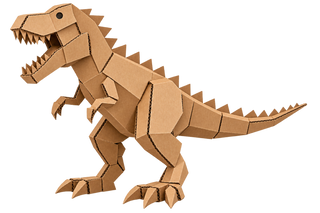
Give a kid a cardboard box and it rarely stays a box for long. It becomes a race car. A castle. A robot. A spaceship. Sometimes all four before dinner.

Kids have never needed help imagining what to build. The trouble usually starts when they try to build it.

OUR JOURNEY

From the first idea to the details that matter.

The real moments that changed the way we designed.

2018.8 THE BEGINNING

The ideas were already there.

Scissors struggle. Utility knives aren’t an option. And even kid-friendly tools can start getting in the way once the cardboard gets thicker, the project gets bigger, or the ideas start moving faster than the tool.

That was the part we couldn’t stop thinking about. Not whether kids could use real creative tools. They already could. We wondered how much further they could go if the tool stopped being the limit.

That became the beginning of Vogalab.

The question that started it all

What if the tool stopped being the limit?
2020.8 THE FIRST PROTOTYPE

It worked. That wasn’t the same as working well for kids.

Our first version worked. Which, we quickly learned, wasn’t the same as working well for kids.

Put a tool in an adult’s hands and they usually use it the way you expect. Give it to a kid and you learn everything you designed wrong.

A working prototype was the beginning, not the finish line.

2024.8 REAL-WORLD USE

Kids showed us what we’d missed.

They pushed cardboard faster. Came in from strange angles. Tried pieces we thought were too big. Changed direction halfway through. And naturally found every place the experience could be better.

So we changed it. Then changed it again. The lesson was simple: if we wanted to make a tool for kids, we had to pay attention to the way kids actually used it.

The unexpected moments became the most useful feedback.

2026.8 DESIGN & ENGINEERING

We worked on the moments that made kids stop.

Each round of feedback sent us back to the design. The product became simpler on the outside, with more thinking underneath it. We revisited the cutting system, the feeding path, and the controls with a clearer goal: fewer interruptions between a child and the thing they wanted to make.

None of these improvements started as features for a comparison chart. They started as moments when a kid had to stop making. And we wanted fewer of those moments.

What we went back to improve

Cutting systemHow can the cutting action better support the materials and movements kids actually use?
Feeding pathWhat changes can reduce interruptions when cardboard is guided through the tool?
Controls & handlingHow can the experience become easier to understand and more comfortable to use?

Less interruption. More independence.

FROM PROTOTYPE TO PRODUCTION

Making one is only the beginning.

A working prototype answers one question: can the idea work? The next challenge is making the design repeatable, so the experience does not depend on a single carefully assembled sample.

For a tool that kids will use, manufacturing is part of the design process. The questions become practical: how the parts fit together, how the cutting assembly and feeding path are aligned, how a finished unit is checked, and how the product is prepared for a family to use.

The next step is to connect those decisions to the real people, production photographs, and records behind Vogalab. We want families to see how the product is made—not just a polished photograph of the finished tool.

THE DETAILS BEHIND THE DESIGN

Designed around the way kids build.

The cutting system, feeding path, and controls were not separate ideas for a feature list. They were all part of the same question: how can the tool get out of the way and let the child keep making?

The details that matter most are often the ones a child never has to think about.

06 / READY FOR FAMILIES

The details parents deserve to know.

Parents should be able to understand the intended age range, suitable materials, supervision guidance, and actual product specifications before buying a children’s tool. We believe those details should be clear, specific, and supported by real documentation.

How is it intended to be used?

Find the appropriate age guidance, suitable materials and supervision information in the product instructions.

What has actually been tested?

Look for the product-specific specifications and completed safety documentation, rather than relying on broad claims.

Where can parents get help?

Product instructions, support contact details and the applicable purchase policies should be easy to find.

OUR DESIGN PHILOSOPHY

Less interruption. More independence.

“The goal isn’t for a child to become really good at using our product.”

Safety matters. Of course it does. But we never believed “safe for kids” should be where the standard ends. A great kids’ tool should also feel good to use. It should work when the idea gets ambitious. It should be intuitive enough that kids can own more of the process themselves.

Because the goal isn’t for a child to become really good at using our product. The goal is for them to forget about the product entirely. To stay focused on the car. The castle. The robot. The giant cardboard thing slowly taking over the living room.

THE MOMENT THAT MATTERS

“Look what I made.”

A crooked wheel. A leaning roof.
A robot with too many arms.

It doesn’t have to be perfect. It belongs to them.

And somewhere along the way, something else happens. There’s a little less, “Mom, can you do this part?” And a lot more, “Look what I made.”

Not because the finished thing is perfect. Usually it isn’t. A wheel is crooked. The roof leans. The robot has an unreasonable number of arms. But it belongs to them.

They imagined it. They figured it out. They changed it when it didn’t work. And they made it real.

WHAT COMES NEXT

Cardboard is just the beginning.

We don’t think of Vogalab as just another cardboard cutter. Cardboard is simply a great place to begin. It’s inexpensive, easy to find, and often headed for the recycling bin. Adults see a box. Kids see material.

And once children start looking at ordinary things and wondering, “What can I make with this?” the world gets a little more interesting. We’re building for the kid who adds another floor after you thought the castle was finished. The one who needs the spaceship to have working doors. The one who turns yesterday’s delivery box into today’s biggest project.

Our bigger goal is to create a new generation of real creative tools designed around the way kids actually think and build. Tools parents can feel good about. Tools kids actually want to use. Tools capable enough that imagination, not equipment, becomes the limit.

VOGALAB / OUR PROMISE

Built for bigger ideas.

And the kids who can’t stop having them.

Kids don’t have kid-sized ideas. Their tools shouldn’t have kid-sized limits.